When the Building Shows Its Other Face: The Case for a Twilight Office Viewing
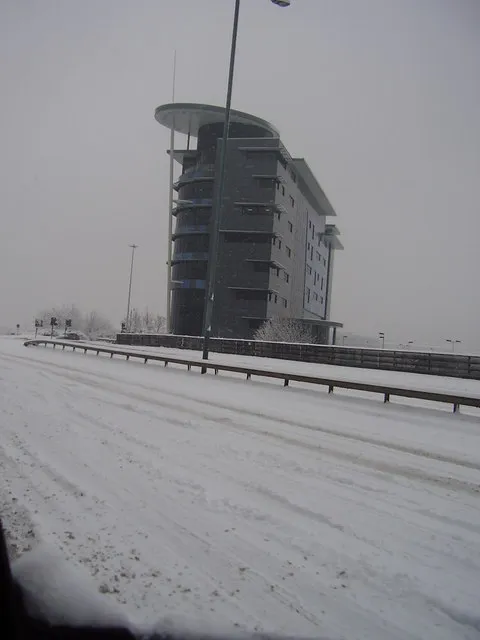
Photo: Steven Ruffles, CC BY-SA 2.0, via Wikimedia Commons
An office can be charming at 11am and troubling at 7pm. At midday the lobby is staffed, the lifts are empty, the cleaners have been through and the neighbouring suite is either quiet or conveniently absent. That is not usually deception; it is presentation. A second viewing after normal working hours is one of the cheapest due-diligence steps a small UK business can take before committing to a lease. It tests the building when the management team has gone home and the tenant is left with the practicalities.
In 2026, with hybrid occupancy still reshaping how UK offices are used, the evening visit has become more rather than less important. A building that empties at 5.30pm may suit a team that works standard hours, but it may feel exposed for staff finishing late or for a business that needs secure out-of-hours access. The point is not to expect a party; it is to see the property under the conditions in which some of the team will actually use it.
Why daylight flatters a building
Daytime inspections concentrate on floor plates, finishes, natural light and first impressions. Those matters are real, but they are only part of the occupational picture. A mid-week viewing tends to coincide with the building's best behaviour: reception is covered, the lifts are not queuing, the heating or cooling is set for comfort and the surrounding streets are busy enough to feel safe.
An after-hours visit exposes the operating model behind that impression. It shows whether the building has a genuine evening life, whether access control is straightforward and whether the landlord's promises about security and cleaning hold up when the main office population has thinned. For a small business taking a lease of three to five years, a single additional visit is a modest commitment against the cost of discovering these issues later.
Security, access and the out-of-hours routine
The first questions are practical. How does a member of staff enter after 7pm? Is the main door locked, and if so, is the fob reader at a well-lit entrance or round the back? Does the fob open the front door, the lift, the floor and the washroom corridor, or are there separate keys and codes that will be forgotten over time? Is there a receptionist, a concierge or a security guard on site, and what is the procedure for visitors who arrive outside normal hours?
Ask for the out-of-hours contact number and test how it is answered. A number that rings through to an empty office is not an emergency arrangement. Check whether the alarm is set by the last person to leave, whether there is a shared entrance with other tenants and how deliveries or couriers are handled after 5pm. If the lease includes a service charge, ask which of these services are guaranteed and which are discretionary.
It is also worth walking the immediate exterior. Poor lighting, an unstaffed rear entrance, a dark cycle store or a loading bay that doubles as an unofficial smoking area can affect how safe staff feel. Security is not only a matter of cameras; it is a matter of routine.
Cleaning, occupancy and the evening economy
A 7pm visit reveals who is actually in the building. Are other floors still occupied, or does the property become a single-tenant island after hours? Is the cleaning team present, and does their schedule clash with late working? Are bins emptied, kitchens left in a reasonable state and washrooms checked? These details feed directly into service-charge expectations and into the daily experience of a small team that may not have its own facilities manager.
The surrounding area matters too. A office that is convenient at lunchtime may feel different at dusk. Check whether nearby cafes, shops and transport hubs remain open, whether the street is well used and whether the building sits next to a pub, restaurant, gym or service yard whose evening activity will become part of the tenant's working environment. None of these issues is necessarily fatal, but each should be known before the lease is signed.
Heating, cooling and the building's second shift
Many UK office buildings run their heating, ventilation and air-conditioning on a timed schedule. The schedule may end at 6pm or 7pm, after which the floor can become stuffy in summer or cold in winter. Ask whether the system can be extended, how much notice is required and whether after-hours use is charged separately. If the lease is inclusive of services, check the definition of normal working hours and the mechanism for additional use.
A twilight visit is also a useful test of solar gain and draughts. A west-facing floor that is pleasant in the morning may be uncomfortably warm at 6pm in July. A floor beside a service riser or entrance may be noisy or cold once the main doors are closed. These are not abstract concerns for a small team without a dedicated building manager; they become daily irritations that are difficult to remedy after completion.
Noise, neighbours and the last mile
Sound behaves differently when the building is quiet. Listen for lifts, plant rooms, extractor fans, nearby kitchen equipment, late deliveries and the general hum of the area. If the office shares a floor with a call centre, a gym or a restaurant, arrange the visit at the time when those uses are most active. A lease can regulate some nuisance, but it cannot redesign the building's acoustics.
Transport deserves the same treatment. A station that is five minutes away at noon may be a different proposition after dark. Check the lighting on the walking route, the frequency of buses and trains at the time staff are likely to leave, and whether parking or cycle storage is accessible outside normal hours. For remote teams who use the office intermittently, the evening visit also clarifies whether the space feels worth the journey when only a few colleagues are present.
A practical after-hours checklist
Before signing, arrange a second viewing at around 7pm and ask the following:
- Which doors and lifts does the fob operate, and is there a separate alarm code?
- Who is on site after hours, and how is the out-of-hours contact line staffed?
- Are cleaning, waste collection and washroom checks scheduled around evening use?
- Can heating, cooling and ventilation be extended, and at what cost?
- Which neighbouring uses are active in the evening, and what noise is audible from the suite?
- Is the approach to the building well lit, and do staff have a safe route to transport?
- What does the service charge say about security, cleaning and out-of-hours services?
Using what you find
The purpose of the twilight viewing is not to find a reason to reject every building. It is to replace assumptions with evidence. If the access control is awkward, ask for it to be clarified or improved before completion. If after-hours heating is chargeable, factor it into the occupational cost. If the building is deserted at 7pm, consider whether that matters to the team and whether the lease gives enough flexibility if working patterns change.
A UK office lease is a long commitment for a small business. The midday viewing tells you what the landlord wants you to see. The evening viewing tells you what the tenant will actually inherit. For the price of an hour after work, that is a sensible second opinion.