Stale Air, Signed Leases: A Small Team's Guide to Assessing Office Ventilation in 2026

Photo: Shixart1985, CC BY 2.0, via Wikimedia Commons
Most UK office viewings follow a familiar pattern. The agent opens the door, the team scans the floor plan, someone tests the broadband speed and everyone listens for traffic noise or a rattling train line. Ventilation rarely makes the agenda. That is a mistake. Air quality is not a background detail; it shapes how a small team works, how often people fall ill and whether a lease feels comfortable long after the novelty of the new address has worn off.
For small businesses, commissioning a full environmental survey before every viewing is rarely proportionate. A structured room-by-room audit is. It gives a team enough evidence to ask better questions, compare two shortlisted offices on more than rent and finish, and decide whether to negotiate, investigate further or walk away.
Why air quality belongs on the viewing checklist
A stuffy meeting room is not merely unpleasant. Rising carbon dioxide levels are a useful proxy for stale air and can coincide with drowsiness, slower decision-making and a general sense of sluggishness. In UK office stock, ventilation arrangements vary widely. Some buildings rely on openable windows and cross-flow. Others are sealed and dependent on mechanical systems. Many sit somewhere in between, with retrofitted extracts, local grilles and a mixture of landlord-controlled and tenant-controlled equipment.
That variety matters because ventilation is often shared responsibility. A landlord may maintain the core system while tenants control local diffusers, filters or supplementary units. If nobody has checked the maintenance record for several years, the practical performance of the system may be far below what the specification suggests.
Start with the senses, then verify
Begin with a simple walk-through before anyone talks about desk layouts. Note the smell at the entrance: damp, musty, heavy cleaning products, food odours or a closed-in staleness that does not lift after a few minutes. Check whether windows open, how far they open and whether restrictors limit airflow. Look for supply and extract grilles, ceiling diffusers, local extract fans in kitchens and bathrooms, and any signs of blocked or painted-over vents.
Listen for mechanical ventilation. A low background hum can indicate an air handling unit at work, but silence does not prove there is none. Ask where the plant is located, when it was last serviced and whether the system runs outside core hours. In older buildings, look for evidence of damp near windows, external walls and lower-ground rooms. A faint musty smell in a basement meeting room is worth taking seriously.
A room-by-room ventilation audit
Meeting rooms. These are often the most densely occupied spaces and the least ventilated. Check for openable windows, local extracts or dedicated supply air. If a room has no opening windows and no obvious ventilation, ask how fresh air reaches it. A room that feels close after ten minutes of conversation will not improve when eight people join a workshop.
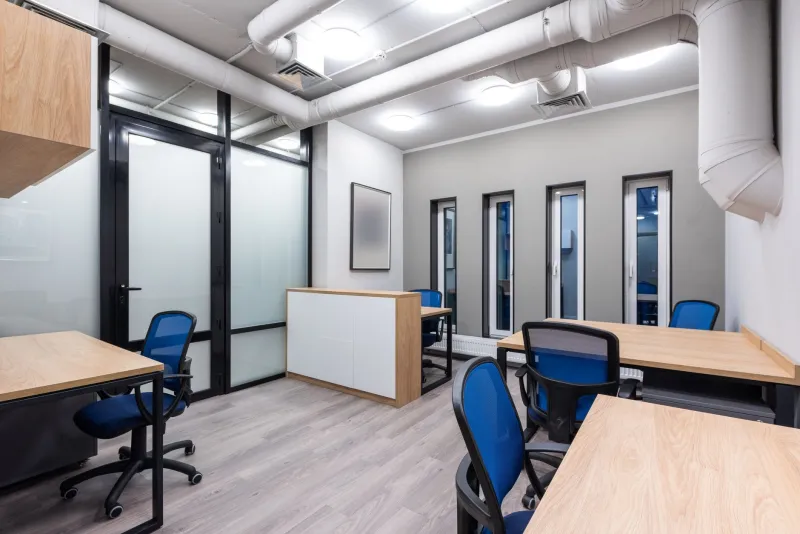
Open-plan floors. Look beyond the central aisle. Partitions, storage walls and dense desk clusters can create dead zones where air stagnates. Check whether local extracts or diffusers have been blocked by furniture or signage. Ask whether the layout has changed since the ventilation system was commissioned.
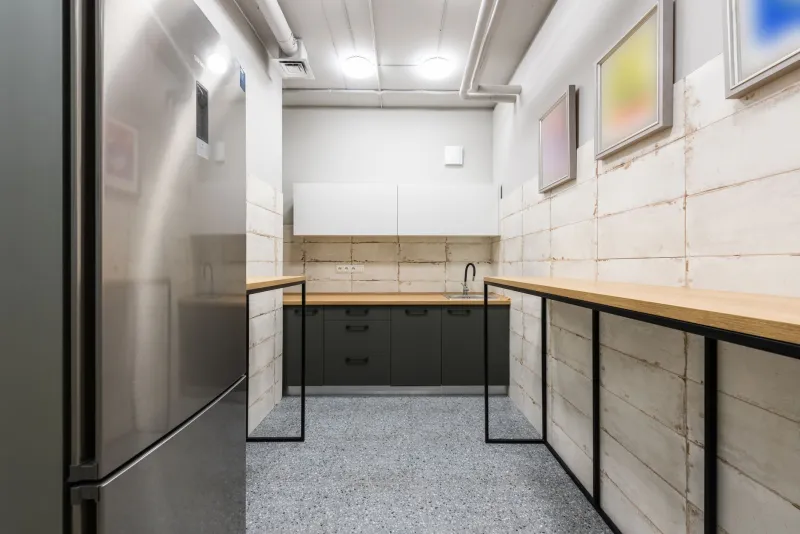
Kitchen and tea points. Extract fans should be obvious and working. Check for grease build-up, lingering food odours and whether the extract discharges somewhere sensible. A tea point that smells of last week's lunch by mid-morning suggests inadequate local extraction.
Print and copy rooms. These rooms can concentrate ozone and toner odours. Confirm that any extraction is functioning and that the room is not also being used as a storage cupboard with vents blocked by boxes.
Lower-ground and basement rooms. These spaces often rely entirely on mechanical ventilation and are more vulnerable to damp. Look for staining, peeling paint, condensation and portable dehumidifiers. Ask whether the space has been tested for damp and whether any remediation is planned.
Windows and facade. Openable windows are an asset, but not a complete solution. A window that opens onto a busy road may trade fresh air for noise and pollution. Restricted openings, sealed units and high-level windows all affect practical airflow. Note whether the team could control ventilation locally or whether it is entirely landlord-controlled.
Use a CO2 monitor as a second opinion
A handheld carbon dioxide monitor is a modest investment and a useful viewing tool. It is not a substitute for a professional ventilation assessment, but it provides evidence. Take readings at the entrance, in a meeting room, at a typical desk position and in any basement space. If possible, revisit at a busier time of day.
As a rough guide, sustained readings above 1,000 ppm in an occupied room suggest ventilation may be inadequate for the number of people present. Readings nearer 600 to 800 ppm in a well-used room are more reassuring. Record the time, occupancy and location. That record is far more persuasive in a negotiation than a vague impression that the office felt stuffy.
What to ask the landlord, and what to get in writing
Questions should be specific. When was the mechanical ventilation last serviced? Are there maintenance records? What filters are used and how often are they changed? Which ventilation equipment is landlord-controlled and which is the tenant's responsibility? Have there been damp or condensation issues? Are there planned works that could affect airflow or service charges?
Ask for the answers in writing, even if only by email. If ventilation improvements are promised, record them in the heads of terms or the lease. For a small team, a clear written response is more valuable than a verbal assurance that the building is well maintained.
Comparing two otherwise similar offices
Use a simple scorecard. For each office, record the ventilation method, whether windows open, CO2 readings taken, signs of damp, evidence of maintenance, tenant control over airflow and any likely service charge implications. Two offices may share the same rent, floor area and location yet differ sharply in air quality. One may have openable windows and readings around 700 ppm; another may be sealed, mechanically ventilated and reading above 1,200 ppm with no service history available.
That difference should influence the decision. It may justify a shorter lease, a break clause, a rent-free period for remedial work or a contribution to portable air cleaning equipment. In some cases it is a reason to keep looking.
When to walk away or negotiate
Persistent damp smells, sealed windows with no mechanical ventilation, missing maintenance records and consistently high CO2 readings are all warning signs. They do not always mean the office is unusable, but they do mean the team should not sign without further investigation. If the landlord is unwilling to disclose basic information about ventilation, treat that as information in itself.
Ventilation is not the most glamorous part of an office viewing. It may, however, be one of the most enduring. A small team that spends twenty minutes checking airflow before signing is less likely to spend the next two years opening windows that do not open, buying desk fans in February or wondering why the meeting room sends everyone to sleep.