The Safety File Before the Signature: Six Documents UK Office Tenants Should Read

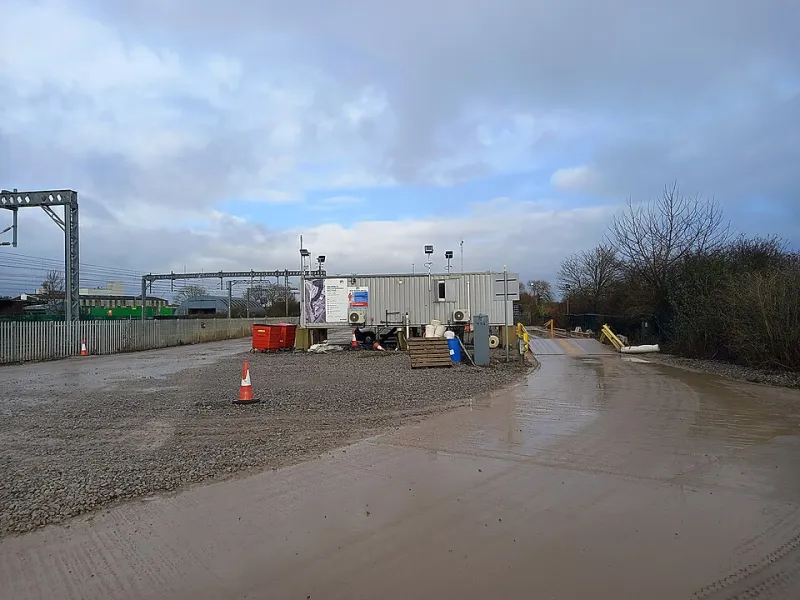
Photo: Colin, CC BY-SA 4.0, via Wikimedia Commons
Most office viewings end with a conversation about rent, break clauses and whether the meeting room takes eight people or ten. The building's safety file, meanwhile, sits in a cabinet somewhere and is produced only when a solicitor's enquiry drags it out. That is a mistake. For a small UK occupier, the safety paperwork is often the most reliable evidence available about how the landlord manages the property — more revealing, in many cases, than the service charge accounts.
What follows is a tenant-side reading list. None of it replaces professional advice, and none of it should be requested after heads of terms are signed if it can be asked for beforehand.
Why the file matters more than the finishes
Under the Regulatory Reform (Fire Safety) Order 2005, every non-domestic premises in England and Wales has a named responsible person. In multi-let offices that is usually the landlord for the common parts, with obligations pushed down to tenants for their own demise. Scotland and Northern Ireland have their own regimes, but the principle holds: somebody is accountable, and the paperwork should show who.
Leases, however, frequently transfer more of that burden to the tenant than occupiers expect — through direct obligations, through service charge contributions, or through compliance clauses that require the tenant to satisfy requirements the landlord has never written down. Reading the safety file before you commit tells you which of those three you are walking into.
1. The fire risk assessment
What it proves: that a suitable and sufficient assessment of the common parts exists, is dated, names the assessor, and carries a live action plan.
What to look for: a review date within the last twelve months, an actions log with named owners and completion dates, and evidence that recorded actions have actually been closed. Check that the assessment covers the whole building and the current use, not last occupant's fit-out.
Red flags: an undated document; an action plan with items outstanding for several years; an assessment prepared for a different demise; no evacuation strategy; no mention of the assembly point or the means of escape from upper floors.
2. The electrical installation condition report
The EICR is the fixed-wiring equivalent of an MOT. Five-yearly is the usual interval, shorter in some circumstances, and a new report is normally expected on a change of occupancy.
Ask for the schedule of test results, not just the summary page. Codes C1 and C2 denote dangerous or potentially dangerous conditions and must be remedied; a report can be labelled 'satisfactory' while still carrying C2 observations, which is a distinction worth pressing on. Also ask what landlord-supplied equipment is PAT tested and how often.
3. The asbestos register and management plan
The duty to manage asbestos under the Control of Asbestos Regulations 2012 sits with whoever controls the premises. Any building constructed or refurbished before 2000 should have a register, and the register should reflect the building as it stands today — not as it stood when the survey was done a decade ago.
No register in a pre-2000 building is a serious finding. So is a register that has plainly not been updated after subsequent works, or a verbal assurance that the building is 'clean' without a survey to support it. Ask whether a management survey or a refurbishment survey was carried out, because the two answer different questions.
4. The legionella risk assessment
Water systems in lightly used buildings are a classic blind spot. The assessment should identify sentinel outlets, record temperature monitoring, and address little-used taps, showers and any cooling equipment. A document that predates a fall in occupancy — say, a floor emptied after a tenant left — is out of date in practice even if it is not out of date on its face.
5. Gas safety records
An annual gas safety certificate, issued by a Gas Safe registered engineer, is required for landlord-supplied appliances. If the building has a communal kitchen, a boiler serving the demise, or any gas-fired equipment within the landlord's control, ask for the current certificate and the previous one.
6. Lifts and the wider shelf
Passenger lifts need thorough examination under LOLER at six-monthly intervals, and the reports should be available. Beyond that, the shelf usually includes the EPC, any pressure systems records, and — for taller buildings — documentation relating to the Building Safety Act 2022 regime for higher-risk buildings. Premises within scope of the incoming terrorism protection duties should also be able to show how they are preparing.
What to put in writing
Send the list to the landlord's solicitor alongside the standard enquiries, and ask specifically:
- for the fire risk assessment and the completed actions log;
- for the EICR with the full schedule of test results;
- for the asbestos register, survey type and management plan;
- for the legionella assessment and recent monitoring records;
- for gas safety certificates and lift examination reports;
- whether any enforcing authority has served a notice on the building in the last five years.
That last question is the one that produces the most interesting silences.
Reading the reply
Watch for documents described as 'available on request' and never produced, certificates with no accompanying remedial evidence, and assurances offered in place of paperwork. Then read the lease's compliance clause carefully. If it obliges the tenant to comply with the landlord's health and safety requirements, ask what those requirements are — in writing — before signing. A clause that references obligations nobody has documented is a clause that can be used against you later.
When to bring in a specialist
Instruct someone if the building predates 2000 and has no asbestos survey, if the EICR carries unresolved C2 observations, if the fire risk assessment is stale or its actions are open, or if the means of escape gives you pause on a busy floor. The cost of a half-day review is trivial against the cost of inheriting an unresolved obligation, and it gives your solicitor something concrete to negotiate with.
Safety paperwork is not glamorous, and no deal has ever been won on the strength of an EICR. But a landlord who keeps a tidy file tends to keep a tidy building, and the reverse is equally true.