Saddle, Shower, Desk: Scoring a UK Office Building for the Cycle Commute
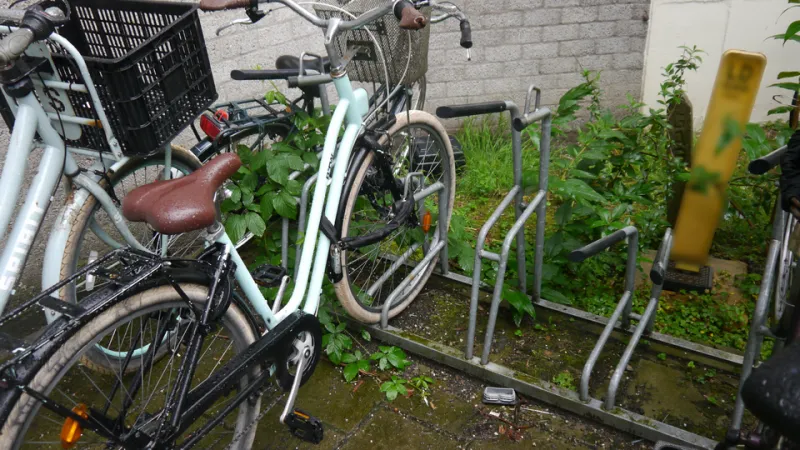
Photo: Boototter, CC BY-SA 4.0, via Wikimedia Commons
Cycle-friendly is one of the most elastic phrases in UK office marketing. It can mean a single Sheffield stand in a dark basement, or a secure compound with cargo-bike bays, showers, lockers and a drying room. For a small business trying to compare buildings, the label is almost useless without a score. The following framework is designed to turn vague claims into a comparable assessment.
Why cycle facilities deserve a line in the budget
For many UK teams, the cycle commute is not a lifestyle extra. It is part of the door-to-desk calculation. Staff who cycle avoid parking charges, congestion and, in some cities, unreliable bus services. But a building that stores bikes badly or offers no changing facilities simply pushes the problem elsewhere. The result is a rack that nobody uses and a commute that quietly reverts to the car.
A score helps tenants ask better questions. It also helps landlords see where their building sits against the market. The framework below is deliberately simple: seven criteria, 100 points, and a requirement for evidence rather than assertion.
The scoring framework
| Criterion | What to measure | Points |
|---|---|---|
| Secure rack capacity | Usable spaces per 10 desks; covered, lit and access-controlled storage | 20 |
| Rack quality | Sheffield stands or two-tier racks; frame support; e-bike charging; maintenance | 15 |
| Cargo and adapted bikes | Dedicated space for cargo bikes, tandems or adapted cycles | 10 |
| Showers | Number, temperature, cleanliness, accessibility and changing space | 15 |
| Lockers and drying | Lockers per regular cyclist; drying room or ventilated hanging space | 10 |
| Last 500 metres | Route quality, crossings, cycle lanes, entrance and delivery-yard conflicts | 15 |
| Policy and management | Booking system, repair kit, pump, evacuation procedure and dispute process | 15 |
A building that scores below 40 should be treated as offering basic storage rather than genuine cycle support. A score between 40 and 70 suggests a workable but uneven offer. A score above 70 indicates a building that has thought seriously about the cycling tenant.
Rack capacity beyond the headline
Ask for the number of usable spaces, not the number of racks. Two-tier systems can increase capacity, but they can also be difficult for heavier bikes or less confident users. Check whether the racks support the frame rather than the wheel, whether they are covered, and whether the store is lit and covered by CCTV. Confirm how access is controlled and whether the store is shared with other tenants.
Capacity should be measured against actual demand. A building with 200 desks and 12 spaces may be adequate if most staff commute by train. A building with 40 desks and 12 spaces may be oversubscribed. Ask the managing agent whether the store is booked, whether occupancy is monitored and what happens when it is full.
Showers, lockers and the drying problem
The shower count matters, but so does the queue. Ask how many showers are available per floor or per building, whether they are accessible, and whether they are cleaned during the working day. A single shower for a floor of 80 people is not a serious offer. Check the changing space too: a shower cubicle with nowhere to put a bag is only half a facility.
Lockers should be allocated, not merely present. Ask whether lockers are assigned to regular cyclists, whether they are large enough for a helmet and shoes, and whether there is a drying room or ventilated hanging space. In a UK climate, wet kit is not an edge case. A building without drying provision will soon smell like one.
Cargo bikes and adapted cycles
Cargo bikes are increasingly common for families and small businesses, but many cycle stores are designed only for standard bicycles. Ask whether there is level access, a wide door and enough turning space for a cargo bike or tandem. Confirm whether adapted cycles can be accommodated. If the answer is no, the building is not cycle-friendly for every cyclist, only for a subset.
The last 500 metres
The route from the nearest cycle lane to the building door is part of the facility. Walk it at rush hour. Check for unprotected junctions, poorly lit underpasses, loading bays and vehicle gates that cross the cycle path. Ask where cyclists enter the building and whether that entrance is the same as the pedestrian entrance. A secure rack is of little use if the final approach feels unsafe.
Questions for agents and landlords
Ask for the cycle strategy in writing. Request the number of spaces, the access arrangements, the shower and locker provision, the drying facilities and the maintenance regime. Ask whether the landlord has considered cargo bikes, e-bike charging and evacuation procedures for cycle stores. If the building is multi-let, ask how disputes over capacity are resolved.
Finally, ask to see the store at the time of day you would actually use it. A 9am visit reveals more than a midday one. The score is not a substitute for judgement, but it gives a small team a defensible way to compare buildings that all claim to be cycle-friendly.